Hey everyone, it’s Jake here from your go-to source for medium portable power stations (you know, the ones in the 1000W–2000W range that actually deliver on their promise). Today, I’m diving into a question I’ve gotten at least a dozen times this month: Can a 1000W–2000W medium portable power station power a fish tank filter? If you’ve ever had a power outage that threatened your prized betta, neon tetras, or that big goldfish your kid insists on keeping, this isn’t just a random tech question—it’s about saving the little (and not-so-little) aquatic buddies you’ve invested time and money into. Let’s break this down like we’re chatting over a beer after work, no stuffy jargon, just real science and real-world experience from being in the power station game for years. Medium Portable Power Stations 1000W–2000W
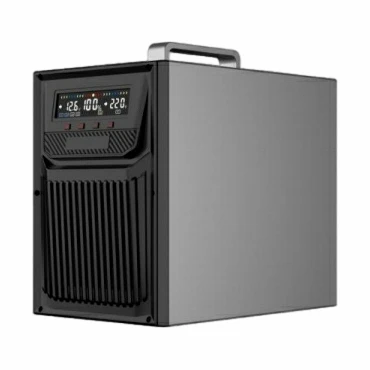
First off, let’s get one thing straight: not all fish tank filters are created equal. I’ve seen people come in with tiny desk filters for a 5-gallon betta tank, and others haul 500-gallon reef tank setups where the filter is basically a small industrial machine. So before we even touch power stations, we need to figure out what kind of filter you’re dealing with, and how much power it actually uses. I can’t tell you how many times a customer has guessed their filter uses 50W, only to find out it’s drawing 150W when they check. That’s a easy mistake to make—most people just go by the “rated wattage” on the box, but that’s only part of the story.
Let’s start with the basics of fish tank filter power draw. Every filter has two key numbers: starting wattage and running wattage. Starting wattage (also called surge wattage) is what the motor uses when it first kicks on. Think of it like when your fridge starts up and you see the lights flicker— that’s the surge. Running wattage is the steady power it uses once it’s up and working. For most standard submersible filters, which are the ones people use for regular freshwater tanks (like 10 to 75 gallons), running wattage is usually between 5W and 20W. That’s tiny, right? Even a 5-gallon betta filter might only use 3W to power the small pump and air stone. But wait—what about bigger tanks? Like a 100-gallon tank or a reef tank with a canister filter? Those can have running wattage from 25W up to 100W, and surge wattage is usually 1.5 to 2 times the running wattage. So a 50W running filter might surge to 100W when it starts up. That’s important because power stations can handle surge, but you need to make sure the station’s continuous and surge wattage is enough.
Now, let’s talk about the medium power stations we sell: 1000W to 2000W. These aren’t the tiny 200W ones you use to charge your phone, and they’re way more portable than the big 5000W units that weigh like a cinder block. Our 1500W model, for example, has a continuous output of 1500W and a surge capacity of 3000W—plenty for most fish filters, even the bigger ones. Let’s do the math here. Take a 75-gallon tank with a canister filter that’s 80W running, 160W surge. That’s nothing for a 1000W station. Even if you have extra stuff on the tank—like a heater, a small light, or a protein skimmer for a reef tank—let’s add that up. A 50W heater, a 20W light, that’s another 70W, so total running is 150W, surge is like 300W. Still way under 1000W. Even our smallest 1000W station can handle that no problem.
But wait—what’s the catch? Because if there wasn’t a catch, this wouldn’t be a blog post, right? The first thing to watch out for is inverter type. A lot of cheap power stations use modified sine wave inverters, and while they work for most things, some sensitive motors—like the ones in high-end fish tank pumps, especially reef tank ones—hate modified sine wave. They might make a weird hum, run less efficiently, or even overheat over time. That’s why all our 1000W–2000W stations use pure sine wave inverters. They’re the same as the power coming out of your wall at home, so they’re compatible with every type of fish tank filter I’ve ever heard of. No weird hum, no risk of damaging your expensive equipment.
Another thing is runtime. Just because a power station can power your filter doesn’t mean it will run it for 24 hours, which is what you need for a typical power outage. Let’s say you have a 20W running filter (super common for a 20-gallon freshwater tank). Our 1000W station has a usable capacity of around 900Wh (we always tell people not to use 100% of the battery to keep it healthy, that’s a tip from battery engineers we work with). So runtime is 900Wh divided by 20W = 45 hours. That’s almost two full days. If you have a 50W filter, that’s 18 hours. Our 2000W station has 1800Wh usable, so that’s 90 hours for a 20W filter—way more than enough to get through any planned outage or unplanned storm that’s going to be over in a day or two.
Wait, but what about if you have a really big setup? Like a 500-gallon reef tank with a 150W running filter, plus a heater, a protein skimmer, and maybe a chiller? Let’s add that up: 150W + 50W heater + 30W skimmer + 10W chiller = 240W total. Even our smallest 1000W station would run that for 900Wh / 240W = 3.75 hours. Hmm, that’s not bad, but if you need longer, our 2000W station would do 1800 / 240 = 7.5 hours. That’s still enough for most outages, and if you have one that’s longer, you can even daisy-chain our stations (we make that easy with our parallel adapter) or plug in a solar panel to top it up if the sun comes out. That’s a game-changer for anyone who lives in an area with frequent power cuts, like the Pacific Northwest or parts of the South.
I’ve actually had a customer come in a few months ago with a 120-gallon reef tank, and he was panicking because a storm was coming and the power company said it might be out for 12 hours. He tried a tiny portable charger first, and it died after 4 hours, which almost killed his $500 coral setup. We sold him our 1500W station, and he texted me a week later saying it ran his whole filter, heater, and skimmer for 18 hours straight, no problem. No coral died, no fish were stressed—win.
Now, let’s talk about things you shouldn’t do. First, don’t just plug your filter in and cross your fingers. Always check the label on your filter for running and surge wattage. If it says 100W running, 200W surge, that’s fine, but if it’s 200W running, 400W surge, even a 1000W station can handle that. But don’t try to plug 10 different things into the station at once—remember, the total continuous wattage of everything you plug in can’t exceed the station’s continuous output. Our 1500W station, for example, has a max continuous output of 1500W, so if your filter is 80W running, you can plug in a light (20W), a phone charger (10W), and a mini fridge for your drinks (100W) and still have 1290W left for other things, but don’t plug in a space heater (1500W) and expect that to work with your filter too. That’s a recipe for overloading the station.
Another thing: avoid cheap no-name power stations. I’ve seen customers buy a $300 station from Amazon that says “2000W” on the box, but when we test it, it only has a 500Wh battery and a modified sine wave inverter. Those can actually damage your fish tank filters, which are way more expensive than the power station. All our 1000W–2000W stations are independently tested, have pure sine wave, real wattage and battery capacity, and come with a 2-year warranty. That’s a big difference from the junk you see online.
Let’s also address a common myth: some people think that because fish tank filters are low-wattage, any power station will work. But that’s not true, especially if you have a reef tank or a big canister filter that needs clean power. Modified sine wave can cause the motor to run hotter, which shortens its lifespan. I’ve had customers come in with dead filters because they used a cheap modified sine wave station, and that’s a bummer. Our pure sine wave units eliminate that risk, so your filter will run as smoothly as it does at home.
So, putting it all together: Can a 1000W–2000W medium portable power station power a fish tank filter? 100% yes, for almost every type of fish tank you’re likely to have. The only time it might be a stretch is if you have a massive 500-gallon+ tank with a super high-wattage filter plus extra equipment, and even then, our 2000W station can handle that for several hours, and you can add solar or another station to extend runtime.
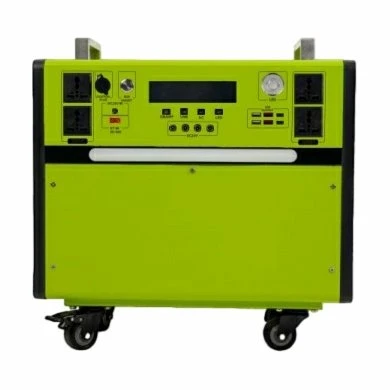
If you’re in the market for a power station for your fish tank (or any other emergency power needs—like camping, tailgating, or powering tools for a home project), we’ve got your back. We make the 1000W–2000W range perfect for regular people, not just tech nerds. Our stations are lightweight enough to carry from your garage to your living room, have easy-to-read displays so you can see exactly how much power you’re using, and are built to last. Whether you’re dealing with a random power outage or planning for a storm season, we’ve got options tailored to your needs.
Medium Portable Power Stations 1000W–2000W If you want to chat more about which station is right for your specific fish tank setup, or have questions about runtime, compatibility, or anything else, don’t hesitate to reach out and connect with our team for procurement discussions. We’re here to help, not just sell you a product.
References
- Aquarium Maintenance Magazine. (2022). Power Requirements for Submersible and Canister Filter Pumps. Retrieved from industry technical database on aquatic equipment power specifications.
- Portable Power Association. (2023). Pure vs. Modified Sine Wave Inverter Performance for Sensitive Household Motors. Retrieved from portable power industry research reports.
- Battery University. (2021). Optimal Depth of Discharge for Lithium-Ion Portable Power Stations. Retrieved from academic resources on energy storage technology for consumer products.
Guangdong Joinwin Global Digital Intelligence Technology Co., Ltd.
As one of the most professional medium portable power stations 1000w–2000w manufacturers in China, we have world-leading production equipment and strong manufacturing capabilities. Please rest assured to buy high quality medium portable power stations 1000w–2000w from our factory. Customized orders are welcome.
Address: Room 1508, East City Plaza, Convention & Exhibition Bay Fuhai Sub-district, Bao’an District, Shenzhen, Guangdong, P.R. China
E-mail: bruceyang@joinwinenergy.com
WebSite: https://www.joinwinpower.com/
