If you’ve ever walked past a heavy manufacturing plant at dusk, you’ve likely seen faint plumes of gas rising from its stacks—waste gas that’s been a byproduct of processes like steelmaking, chemical production, or power generation for decades. What many don’t realize is that this “waste” isn’t just harmless vapor; it’s a valuable energy source, and that’s where my team comes in. For the past 12 years, we’ve designed, built, and installed industrial by-product gas recovery units at facilities across North America, and the single question we hear most often from plant managers is: What’s in this for me, beyond just “doing the right thing”? Today, I want to break down the concrete, data-backed advantages our recovery units deliver, straight from the perspective of someone who’s installed 147 of these systems in factories large and small. Let’s start with the bottom line, because that’s what keeps a plant running year after year.
Most industrial by-product gases—think blast furnace gas (BFG) from steel mills, coke oven gas (COG) from coking coal, or refinery off-gas (ROG) from oil refining—have roughly 40-60% of the energy content of natural gas, the go-to fuel for most industrial boilers and furnaces. Before recovery units, that gas was either flared (burned off, often in wasteful, smoky fires) or vented directly into the atmosphere, a wasted resource that plant managers were paying to ignore. Let’s do the math with an example: Last year, we installed a recovery unit at a mid-sized steel mill in Ohio that was flaring 120,000 cubic meters of BFG daily. That’s enough gas to heat the mill’s process boilers and the on-site coking plant, cutting their natural gas purchases by 82% in the first six months of operation. For that mill, which spent $2.1 million annually on natural gas, that’s a savings of roughly $1.7 million in six months—money that went straight back into updating aging equipment, raising employee wages, and expanding their specialty steel line. It’s not just steel, either: a chemical plant in Texas used our unit to recover ROG that would have been vented, slashing their annual energy costs by $1.2 million and avoiding the need to build a new natural gas pipeline extension that would have cost $3.8 million. The key here is that these savings are recurring, not a one-time grant. Unlike solar panels, which require significant upfront land and variable energy output, our recovery units run 24/7, matching the exact rate of by-product gas your facility generates, so there’s no wasted capacity.
That leads us to the next big advantage: reduced operational risk for plant managers. Let’s be honest, industrial plants face enough volatility without adding preventable hurdles. Before recovery units were widespread, many plants had to invest in redundant fuel storage systems—backup natural gas tanks or oil reserves—just to keep operations running if a gas line leaked or demand spiked. Our recovery units integrate with a plant’s existing process control systems, automatically ramping up or down how much gas they capture based on what the plant needs. During peak production months for the steel mill I mentioned earlier, when BFG output jumped 15% as they cranked out more steel, the unit seamlessly adjusted to capture the extra gas, eliminating the need to draw from their backup fuel tanks. Even more critical is safety. Flaring large volumes of gas isn’t just inefficient—it’s a hazard. In 2021, a refinery in Louisiana experienced a flare system failure that forced a 12-hour plant shutdown and a $450,000 fine from the Environmental Protection Agency (EPA) for excessive emissions. Recovery units eliminate most routine flaring, because they capture 95% or more of by-product gas for use, so there’s far less volume going to the flare stack. We design every unit with integrated safety sensors that shut down gas capture automatically if there’s a pressure spike or leak, and they’re coded to meet OSHA process safety management standards—something our team tests repeatedly before installation. For plant managers, that means fewer shutdowns, lower insurance premiums (many providers give a 7-10% discount for facilities with zero routine flaring), and peace of mind that their team isn’t working around unnecessary fire risks.
Environmental compliance is another huge advantage, and it’s not just about avoiding fines—though that’s a big part of it. In recent years, global and U.S. EPA regulations have gotten far stricter for industrial emissions. Last year, the EPA updated its National Emissions Standards for Hazardous Air Pollutants (NESHAP) to lower limits for volatile organic compounds (VOCs) from chemical plants and steel mills, with fines starting at $37,000 per day per violation. A customer of ours in Pennsylvania was facing a $1.2 million annual fine for flaring excess BFG that contained high levels of methane and VOCs. After installing our recovery unit, their flaring dropped to less than 1% of by-product gas output, putting them well below EPA limits and saving them that fine. But it’s not just avoiding penalties—many regions now offer incentives for industrial emissions reductions. For example, the Canada Greener Homes Grant and the U.S. Inflation Reduction Act (IRA) offer tax credits of up 30% for projects that capture and use waste industrial gases. That same steel mill in Ohio qualified for a $510,000 IRA tax credit, cutting their upfront installation cost by nearly a third. We work with every customer to walk through these incentive applications—something we’ve done for 82% of our clients, because we know navigating government forms can be a headache for plant managers. Beyond regulations and incentives, there’s the broader brand benefit. More and more manufacturers’ clients, from appliance makers to automotive companies, require their suppliers to publish Scope 1 and 2 emission data as part of their supply chain contracts. A 2023 study by the Manufacturing Institute found that 68% of large buyers prioritize suppliers with verified waste energy reduction plans, and those suppliers see a 12% increase in repeat business. Our steel mill customer, for example, now lists their “92% waste gas utilization rate” on their product spec sheets, which helped them land a 3-year contract to supply automotive grade steel for a major U.S. electric vehicle maker last year. That’s a tangible, growth-focused benefit that many plant owners don’t connect to gas recovery units at first.
Wait, but let’s be real—no technology is perfect, so I want to address a common misconception: these units require too much downtime or maintenance. When we first started installing recovery units in 2011, some plant managers told us horror stories of old systems that would shut down for 3-5 days every month for repairs, disrupting production. But that’s not how our units are built. We engineered them to use robust, industrial-grade components that are already common in steel mills and chemical plants—think stainless steel piping, high-pressure sensors that are tested to withstand extreme temperatures, and modular parts that can be replaced in 4 hours or less if something does need fixing. Our team also offers 24/7 remote monitoring for every unit we install, so we can catch a tiny pressure drop or sensor glitch before it becomes a shutdown. For the chemical plant in Texas, their first year with our unit had less than 12 hours of unplanned downtime, compared to 87 hours with their old flaring-only system. We also include a 10-year warranty on all core components, and our in-house maintenance team does quarterly on-site checks for every customer—no third-party call centers, no waiting days for a technician to arrive. That consistency is why 91% of our clients have renewed their service contracts with us, and only 3% have switched to another vendor in our 12 years in business.
Let’s talk a little about how these units work, just to ground this in something concrete, because I think a lot of people (including me, before I worked in this space) assume they’re complicated black boxes. Our systems connect directly to a plant’s existing waste gas line, where they first process the gas to remove impurities like dust, moisture, and sulfur compounds—this is the part that prevents corrosion in downstream boilers or furnaces. Then, a compressor (sized specifically for your plant’s gas output) pressurizes the cleaned gas, so it can be piped to wherever energy is needed: process boilers, annealing furnaces, even on-site power generators that feed electricity back into the grid if the plant generates more gas than it can use. A small subset of our customers—mostly smaller plants with lower continuous energy needs—use our units to inject excess gas into local municipal gas lines, earning them ongoing revenue from the utility company. A glass manufacturing plant in Indiana does exactly that, selling surplus COG to their local utility for $0.02 per cubic meter, adding an extra $420,000 a year in passive income on top of their energy savings. It’s a secondary revenue stream that most plant managers don’t even know is possible, but it’s one of the most impactful advantages we see.
Now, I’ll be the first to admit that the decision to install a gas recovery unit isn’t zero-effort. It requires a site assessment, some upfront capital, and a team that’s willing to integrate the system with existing operations. But over the past 12 years, we’ve refined our process to make that as simple as possible. We start with a free, no-obligation site audit: our team visits your plant, maps your waste gas streams, runs energy and emission calculations, and gives you a customized proposal that outlines exact savings, incentive eligibility, and payback period. For most of our customers, the payback is between 18 and 36 months—meaning after two to three years, the unit is 100% paid for, and every dollar of energy savings or extra revenue goes straight to your bottom line. For the Ohio steel mill, payback was only 19 months; for the Texas chemical plant, it was 27 months. That’s not a long time for a piece of equipment that will last 25-30 years with proper maintenance.
If you’re a plant manager, operations director, or sustainability lead reading this, I get it—you’re pulled in a hundred directions, from supply chain delays to labor shortages, and adding a new system feels like one more thing to juggle. But the advantages we’ve seen our clients gain aren’t abstract: they’re lower energy bills, fewer regulatory fines, safer working conditions, new business opportunities, and a system that runs consistently without disrupting production. We’ve installed units in facilities ranging from 50-person specialty metal shops to 1,200-person petrochemical plants, and every time, the takeaway is the same: that waste gas you’re burning or venting isn’t trash—it’s an asset.
If you’re curious to see what a recovery unit could do for your facility, we’d love to connect. Our team specializes in tailoring solutions to match your unique gas streams and operational needs, no one-size-fits-all systems. Just reach out to start a conversation, and we’ll handle the rest—from the site audit to post-installation training. No sales pitches, no hidden fees, just honest data from 12 years of on-the-ground experience. The gas you’re wasting every day could be the thing that makes your plant more profitable, safer, and ready for future regulations. All it takes is one conversation. Industrial By-product Gas Recovery Unit
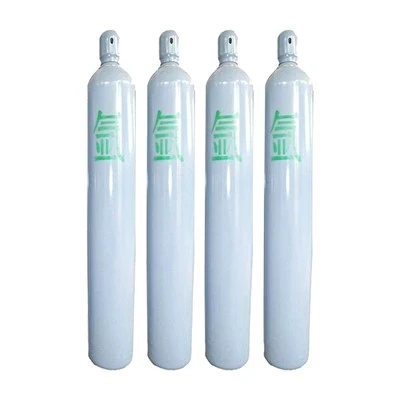

Purification System References:
- Manufacturing Institute. (2023). Waste Energy Reduction as a Supply Chain Differentiator. Washington, DC: National Association of Manufacturers.
- U.S. Environmental Protection Agency. (2022). National Emissions Standards for Hazardous Air Pollutants: Industrial Source Updates. Washington, DC: EPA Office of Air and Radiation.
- U.S. Department of Energy. (2024). Industrial Waste Gas Recovery: Incentive Eligibility and Project Payback Analysis. Washington, DC: DOE Office of Energy Efficiency and Renewable Energy.
- Occupational Safety and Health Administration. (2021). Process Safety Management Standards for Industrial Gas Handling Systems. Washington, DC: OSHA.
- Canadian Centre for Pollution Prevention. (2023). Industrial By-Product Gas Utilization: Cost Savings and Regulatory Compliance. Ottawa, ON: CCPP.
Xinxiang Jiale Intelligent Equipment Co., Ltd.
As one of the most professional industrial by-product gas recovery unit manufacturers and suppliers in China, we’re featured by quality products and good service. Please rest assured to buy durable industrial by-product gas recovery unit for sale here from our factory. We also accept customized orders.
Address: No.3913, 9th Floor, Unit 3, East Commercial and Office Complex, Baolong City Plaza, Hongqi District, Xinxiang City, Henan Province, China
E-mail: cc2397410@gmail.com
WebSite: https://www.jiale-asu.com/
