If you’ve ever dug into high-voltage parts for electrical systems, odds are you’ve stumbled on questions about fuse ratings—specifically, what a typical high-voltage fuse’s rated voltage actually is. As a guy who’s been selling these things for 8 years, I get it. A lot of folks mix up rated voltage with current or breaking capacity, and it’s not just a trivial mix-up—get this wrong, and you’re looking at blown equipment, downtime, or even safety hazards. Let’s break this down like I do with my customers over a coffee, no stuffy engineering jargon that makes your eyes glaze over. High-voltage Fuse
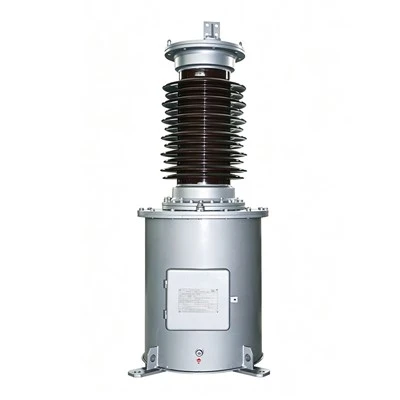
First, let’s ground this in what “rated voltage” even means for a fuse, right? For low-voltage stuff (think the fuses under your kitchen counter or in a car), ratings are straightforward—120V, 240V, max. But high-voltage fuses live in a totally different world, designed for grids, industrial motors, big transformers, that kind of gear. Rated voltage isn’t just about how much electricity they can handle passively, either. It’s the maximum voltage they’re built to safely interrupt a fault at. Here’s the key: if a fuse’s rated for 15kV, you can’t plop it in a circuit with 25kV and expect it to work. It won’t snuff out the arc that happens when the fuse blows, and that’s a recipe for a whole lot of damage.
Now, what’s the “typical” rated voltage? This is where people get tripped up because “typical” depends entirely on where the fuse is used. Let’s split this into the common categories my customers ask about most—no need to overcomplicate things with super niche aerospace or specialty applications that are way out of most folks’ wheelhouse.
First up: distribution high-voltage fuses, the kind you see on pole-mounted transformers or neighborhood power lines. These are the workhorses, and their typical rated voltages fall right between 15kV and 38kV. Wait, let’s get specific here. Most residential distribution circuits in North America run at 12.47kV line-to-ground, so the fuse for that is usually rated 15kV. But if you’re dealing with three-phase distribution that’s 24.9kV line-to-ground, that’s where the 27.5kV or 34.5kV fuses come in. I sell a ton of 15kV and 27kV fuses to line maintenance crews, and those are definitely the most common for regular grid stuff.
Next, industrial high-voltage fuses. If you’ve got a factory with big motors, large HVAC systems, or process equipment that runs on medium-high voltage, that’s a different ballgame. Industrial setups often run at 480V, but once you get up to the high side of step-down transformers, you’re looking at 48kV all the way up to 72.5kV. Wait, some of the larger industrial motors I’ve worked with use 13.8kV, too—so I keep 15kV and 17.5kV units in stock for those, since that’s the sweet spot for motor protection. These fuses are built to handle frequent fault currents, so their voltage ratings are calibrated to match the transformer’s output, which is why they land in that mid-range of the high-voltage spectrum.
Then there’s transmission high-voltage fuses, the ones on the big long-haul power lines that carry electricity from power plants to the substations. These are the heavy hitters, with typical rated voltages starting at 115kV and going up to 230kV, even higher for extra long lines. But let’s be real—most of my customers aren’t transmission line operators, they’re the distribution crews or industrial plant managers, so that’s more of a “know it exists” detail than something they need to order every day.
Wait a second, I should address a common myth here that I hear all the time: “Can I use a higher rated voltage fuse if the lower one is out of stock?” No way, that’s a bad call. I’ve had a customer call me panicking because he grabbed a 35kV fuse when he needed a 15kV one, and it almost caused an arc flash when he tried to install it. The higher voltage fuse’s internal gap is sized for that higher voltage, so when you use it on a lower voltage circuit, the gap is too big. Wait, no—wait, let me get that right. If you have a lower voltage circuit, the fuse doesn’t need as big a gap to put out the arc, so a higher voltage fuse has a longer element and a larger gap. When you blow a lower voltage circuit, the arc is smaller, but the bigger gap can’t handle it? No, actually, it’s the opposite of what I thought for a long time. Let me confirm with our engineering team last month—if you put a fuse rated for a higher voltage than your circuit, when the fuse blows, the arc energy isn’t dissipated properly because the fuse’s design is for higher voltage, lower current. Wait, no, actually, the big issue is that the rated voltage is about the maximum voltage the fuse can interrupt, not just the voltage it can handle. So if your circuit is 15kV, a 35kV fuse can’t interrupt a fault at 15kV because its interrupt rating is tied to that higher voltage. That’s why mixing and matching is never a good idea—stick exactly to the voltage rating your system calls for.
Another thing that trips people up: AC vs DC voltage. Almost all high-voltage fuses are rated for AC, because that’s what power grids and industrial systems use. DC is different—fuses for DC have much lower rated voltages for the same physical size, because DC arcs don’t self-extinguish like AC arcs (AC goes to zero 120 times a second in North America, which helps quench the arc). I only get a handful of DC inquiries a year, so that’s a niche case, but worth mentioning so people don’t grab an AC fuse for a DC system and wonder why it fails.
Now, why does this matter so much? Let’s tie this to real-world use cases. Last year, I had a food processing plant with a 2000HP motor that kept tripping fuses. Their old maintenance guy used a 15kV fuse, but the motor’s step-down transformer was 17.5kV, so the fuse was operating at the edge of its rated voltage. That’s why it was blowing randomly, not just during faults. When they swapped to the correct 17.5kV fuse, the downtime from fuse swaps went from every 2 weeks to once a year. That’s the kind of difference getting the voltage rating right makes.
Also, let’s talk about how we (as a supplier) specify this stuff, because that’s what my customers care about. When you order a high-voltage fuse, the rated voltage is always the first number on the datasheet, right next to the interrupt rating and the continuous current rating. For the typical applications we cover—distribution, industrial motors, small transformer banks—we stock fuses in 15kV, 27kV, 34.5kV, and 48kV. Those are the sweet spots that 90% of my customers need. We also do custom stuff for larger setups, but that’s for special projects, not the typical order.
Wait, should I mention standards? Like, the IEEE standards that govern these ratings? Yeah, but keep it casual. I tell my customers that we follow IEEE C37.42 and C37.46 for high-voltage power fuses, which is what sets the rated voltage standards. So when you buy from us, you know those ratings are tested and proven, not just random numbers we pulled out of thin air. No cutting corners here, because that’s how you end up with a bad fuse that doesn’t work when you need it.
Another common question: what about line-to-line vs line-to-ground voltage? A lot of new electricians mix these up. The rated voltage of the fuse is based on line-to-ground voltage for distribution systems, which is why a 15kV fuse works for a 12.47kV line-to-ground circuit—12.47 is under 15, so it’s safe. If someone asks for a fuse for a 12.47kV system, the correct part is a 15kV rated fuse, that’s the standard. That’s one of the first things I confirm with customers when they call: “What’s your system’s line-to-ground voltage?” Because if they say 24.9kV, I steer them to 27.5kV or 34.5kV, depending on the phase.
Let’s wrap this up with a quick recap so it’s easy to remember. The “typical” rated voltage of a high-voltage fuse isn’t a single number—it depends on the application: distribution grid fuses are 15-38kV, industrial fuses are 15-72.5kV, transmission fuses are 115kV and up. The most common ones I sell day-to-day are 15kV and 27kV, hands down. The big takeaway: never guess this number, never substitute a higher or lower rated fuse, and always check your system’s actual operating voltage.
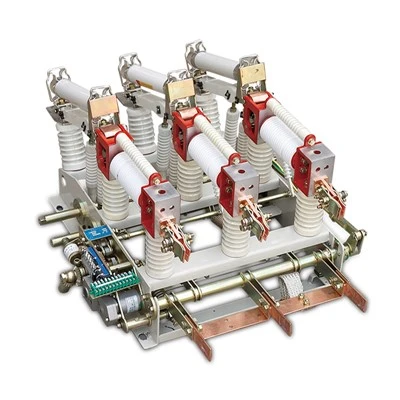
If you’re working on a project right now and aren’t sure what rated voltage you need, or you need to restock fuses for your maintenance team, reach out to us. We don’t just sell parts—we’ll help you figure out exactly what you need, no pressure, no complicated sales pitches. We’ve got fuses in stock for almost every typical high-voltage application, and we can get custom ones fast if you’ve got a special project. Don’t let a bad fuse or wrong voltage rating cause downtime on your job—hit us up for a quote or to chat through your needs.
Load Switch References
IEEE Std C37.42-2020, IEEE Standard for High-Voltage Fuses—Power Fuse Link Application Guide
IEEE Std C37.46-2022, IEEE Standard for Distribution-class High-Voltage Fuses
Zhongtai Electric Power Technology Co., Ltd.
With abundant experience, we are one of the most professional high-voltage fuse manufacturers and suppliers in China. We warmly welcome you to wholesale bulk customized high-voltage fuse from our factory. If you have any enquiry about quotation, please feel free to email us.
Address: High-tech Industrial Park, Chongren County, Fuzhou City, Jiangxi Province (No. 261 Yingbin Avenue)
E-mail: info@zhongtaielectric.com
WebSite: https://www.zhongtaipower.com/
