If you’ve ever walked through a manufacturing plant—say, a steel mill, a power plant, or a petrochemical refinery—you’ve probably felt that constant, oppressive heat that hangs in the air, the kind that makes metal tools too hot to touch after just a minute of use. Now, imagine those same plants relying on parts that have to hold up under that heat, day after day, year after year. That’s where alloy steel bars come in, and as someone who’s spent 12 years selling these bars directly to manufacturers, fabricators, and plant engineers, the question I get more than any other is: Is alloy steel bar suitable for high temperature use? The short answer is yes—but not all alloy steel bars are created equal. And knowing which types work, why they work, and where to use them is the difference between a part that lasts for years and one that fails, costly downtime, and a safety risk. Alloy Steel Bar
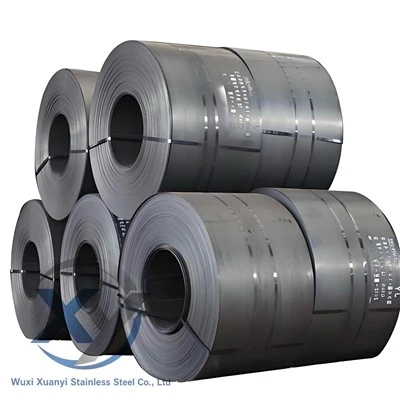
Let me start with a common misconception I hear all the time: “Steel is steel, right? If it’s metal, it’ll hold up to heat.” No, that’s not true. Carbon steel, which is the most basic form of steel, starts to lose its structural strength once temperatures climb above 400°C (750°F). By 600°C (1112°F), it’s barely half as strong as it is at room temperature. That’s why you’ll never see carbon steel bars used in furnace components, boiler tubes, or any part that has to operate continuously in heat that high. But alloy steel bars are different. They’re made by adding small, carefully controlled amounts of other elements—chromium, molybdenum, nickel, vanadium, even titanium—to the iron and carbon base. Those elements change the steel’s atomic structure, give it new properties, and that’s where its high-temperature performance comes from.
I remember a client about eight years ago who worked at a small oil refinery in Texas. They were having constant failures with the bolts holding their distillation column’s overhead condenser. The bolts were made from regular carbon steel, and after just six months of being exposed to 550°C (1022°F) gas and vapors, they were stretching, corroding, and breaking. The refinery had to shut down for three days every quarter to replace them, and that cost them hundreds of thousands of dollars in lost production. They called me because another fabricator had recommended alloy steel bars, and after we looked at their application, we suggested grade 4140 chromium-molybdenum alloy steel. 4140 has 0.80-1.10% chromium and 0.15-0.25% molybdenum—enough to give it high-temperature tensile strength and resistance to thermal fatigue. We machined their custom bolts from solid alloy steel bar stock, and five years later, they still haven’t had to replace a single one. That’s when I really saw how alloy steel bars solve real, expensive problems in high-heat environments.
Now, not all alloy grades work at the same temperatures, so it’s important to match the right alloy to the right application. Let’s break down the common grades I supply, and where I recommend each for high-temperature use. First, there’s the 41xx series: chromium-molybdenum steels, like 4130 and 4140. These work well for continuous service up to about 550°C (1022°F). They’re tough, easy to machine and weld, which makes them perfect for parts like boiler hangers, valve stems, and heat exchanger components that aren’t exposed to constant, extreme heat. Next is the 86xx series, another nickel-chromium-molybdenum grade, which offers a little more strength at high temperatures, usable up to about 600°C (1112°F). I often use 8620 for parts that need both high-temperature performance and good wear resistance, like gear shafts in industrial ovens.
For higher temperatures, say up to 700°C (1292°F), we move to the heat-resistant alloy steels, like 304 and 316 stainless? Wait, no—wait, 304 stainless is austenitic stainless, and while it’s corrosion-resistant, it starts to lose strength above 600°C. No, for that 700-800°C range, I use grades like 310 stainless (sometimes called 25-20 stainless, because it’s 25% chromium, 20% nickel) or even the higher alloy grades like Incoloy 800, which is a nickel-iron-chromium alloy steel. Incoloy 800 is great for furnace trays, pyrolysis tubes, and parts that are exposed to both high heat and corrosive chemicals at the same time. I had a client that makes parts for glass manufacturing—they needed a tray that could hold molten glass at 850°C (1562°F) for 12 hours a day, every day. Regular steel would have deformed in a week, but Incoloy 800 bars we supplied lasted three years. That’s the kind of result that makes me confident in alloy steel bars for high-temperature use.
But it’s not just about what alloy you pick—there are other factors that determine if it will work in a high-heat application. Thermal fatigue is a big one. That’s when a part goes through repeated heating and cooling—like a valve that opens and closes, or a furnace door that’s used daily. Every time it heats up, the metal expands; every time it cools down, it contracts. Over time, that constant expansion and contraction causes tiny cracks to form, and eventually, the part breaks. Alloy steels with higher thermal conductivity and lower thermal expansion are better at resisting that. For example, molybdenum is a common addition to alloy steel bars because it lowers thermal expansion, so parts made with molybdenum are less likely to crack from thermal cycling. I also always tell clients to consider the environment, not just the temperature. Is the part exposed to oxygen? Sulfur? Chlorine? Those chemicals can cause hot corrosion, which is different from regular corrosion—at high temperatures, chemicals react with the metal’s surface to eat away at it, even if the steel is rated for that temperature. For example, if a part is in a refinery where there’s hydrogen sulfide (H2S) at high temperatures, not only do you need an alloy that’s strong in heat, you need one that’s resistant to sulfidation, like grade 4130 modified with small amounts of niobium, or Incoloy 825.
I’ve also learned over the years that people sometimes confuse high-temperature strength with creep resistance. Creep is a silent failure that happens when a part is under a constant load at high temperatures, slowly deforming over time until it can no longer hold the load. A good example is a steam turbine rotor: it’s under tons of pressure, spinning at high speeds, and exposed to 650°C steam. Carbon steel would creep so much it would warp in weeks. But alloy steel bars with high chromium and molybdenum, like grade 12CrMoV, have excellent creep resistance up to 600°C, so they can hold that constant load for decades. That’s a critical point—if a part is going to be under load at high temperature, creep resistance is non-negotiable, and alloy steel bars are the only common steel that has that property.
Now, I want to be honest here: alloy steel bars aren’t right for every high-temperature application. If you’re working at temperatures above 1000°C (1832°F), even the best alloy steels start to break down. For those ultra-high temperatures, you’d need something like a ceramic or a superalloy, which are way more expensive and not practical for most structural parts. But 99% of the high-temperature applications my clients deal with fall between 200°C (392°F) and 850°C (1562°F)—that’s where alloy steel bars are the best balance of performance, cost, and availability. They’re cheaper than superalloys, easier to machine and fabricate, and more consistent in quality than custom cast parts.
One mistake I see new engineers make is buying the cheapest alloy bar they can find, just because it’s labeled “high-temperature.” A lot of offshore suppliers cut corners by using inferior alloy elements, or mislabeling lower-grade steel as a high-temperature alloy. I’ve had clients come to me after buying bars from a generic supplier, only to find out they’re actually carbon steel with a thin coating that makes them look like alloy steel, and they fail within months. That’s why, as a supplier, I only work with mills that have full traceability, and every batch of alloy steel bar I sell comes with a material test report (MTR) that confirms the chemical composition, tensile strength, and high-temperature performance. That MTR is non-negotiable for any high-temperature application—you can’t risk guessing the quality of the metal that’s holding up your equipment.
Let me wrap this up with a practical example that I see all the time. A few years ago, a team from a biomass power plant came to me. They were building new components for their boiler, which runs at 580°C (1076°F) to turn steam for turbines. They had originally specified carbon steel, but when I ran the numbers, I told them carbon steel would only last about two years in that environment—maybe less, if there was any impurities in the steam. We proposed grade 4140 alloy steel bars, and their total part cost was only 15% higher than the carbon steel. But their downtime for replacing boiler parts would drop from every two years to every 15 years, and the safety risk of a boiler failure would be almost eliminated. They went with the 4140 bars, and now they’re one of my repeat customers, because they understand that in high-temperature applications, a little extra cost up front saves way more in the long run.
So, to answer the original question: Yes, alloy steel bars are absolutely suitable for high temperature use, but only if you pick the right grade, match it to your specific temperature, load, and environment, and source it from a reliable supplier that provides certified material. It’s not a one-size-fits-all, but for almost every industrial, manufacturing, and energy application that operates between 200°C and 850°C, alloy steel bars are the most reliable, cost-effective choice.

If you’re working on a project that requires parts for high-temperature service, whether that’s boiler components, furnace parts, valve stems, gear shafts, or anything else, I can help you select the right alloy grade, get you a custom cut of bars to your exact dimensions, and provide all the necessary material test reports to make sure the parts work as intended. I’ve been in this business long enough to know that choosing the right alloy steel bar for high heat doesn’t have to be complicated—just give me the details of your application, and I’ll guide you through the process.
Stainless Steel Plate References
ASTM International. (2020). Standard Specification for Alloy Steel Bars for High-Temperature Service. ASTM A320/A320M-20.
Metal Powder Industries Federation. (2018). High-Temperature Performance of Alloy Steels for Structural Applications. MPIF Technical Report 107.
NACE International. (2021). Corrosion Resistant Alloys for High-Temperature, High-Pressure Environments. NACE Standard RP0775.
Wuxi Xuanyi Stainless Steel Co., Ltd.
Wuxi Xuanyi Stainless Steel Co., Ltd. is one of the most professional alloy steel bar manufacturers and suppliers in China. With abundant experience, we warmly welcome you to wholesale bulk durable alloy steel bar made in China here from our factory. If you have any enquiry about cooperation, please feel free to email us.
Address: Room 1207, Building 11, Shengang Metropolis Plaza, No. 299 Fangcheng Avenue, Xinwu District, Wuxi City,China.
E-mail: jscherryxy@163.com
WebSite: https://www.xuanyisteel.com/
