Hey everyone,
If you’ve ever dabbled in 3D printing for jewelry, dental models, or those custom figurines you thought no one would notice until you hit print, you know wax is the unsung hero here. It’s the go-to material for lost-wax casting because it melts clean, doesn’t leave gunk that ruins your final part, and is way easier to work with than other plastics when you need tiny, intricate details. But here’s the thing I get asked nonstop as a 3D printing wax material supplier: “What color options are even out there for wax filament/resin? Will my choices actually make a difference for my project?”
I’m not gonna sit here and spit fancy jargon that makes your eyes cross. Let’s keep this real—no AI filter, just what I’ve seen customers struggle with, what works, and why color matters more than you probably think. 3D Printing Wax Material
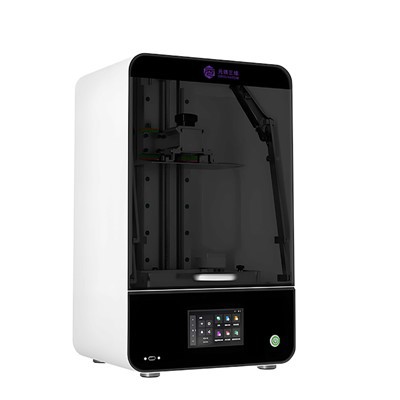
First off, let’s cut to the chase: Wax isn’t just “yellow wax” like that old candle you burned in college (sorry, don’t @ me). The color options depend on two big things: what base wax we’re using to make the material, and why you’re printing it. Most 3D printing wax falls into two categories: filament (for FDM 3D printers, the ones you might have on your workbench or in a small studio) and resin (for SLA/DLP printers, the high-detail ones for tiny jewelry parts). Each type has its own color lineup, and there’s a reason we don’t just offer rainbow colors for the sake of it.
Let’s start with filament wax first—super popular for jewelry makers, small foundries, and even hobbyists who are just getting into 3D printed casting. The base wax here is usually paraffin wax mixed with a little microcrystalline wax to make it sturdy enough to feed through an FDM extruder without snapping. The go-to color for filament wax? Natural translucent white. Wait, why not clear? Because natural wax has tiny micro-bubbles (we can’t 100% eliminate ’em without messing up the print flow) so it’s more of a milky white that lets light through just enough to see layer lines, but not so much you can pick apart every tiny ridge. We also offer opaque ivory, which is for people who don’t want to see layer lines at all—great for larger cast parts where surface finish matters more than seeing fine details. Oh, and we recently added a light amber tinted option for filament, not too dark, just enough to contrast with metal when casting. Why? Because when you pour molten gold or silver over a wax print, you can spot any leftover wax spots or thin areas way easier if the wax is a warm amber instead of pale white. No more missing tiny defects at 2 AM before a casting deadline—small win, big difference.
Now, resin-based wax for SLA/DLP printers—this is for the pros doing tiny jewelry settings, dental models, or that custom figurine with 1mm tiny ears. The base here is different; it’s a photopolymer wax blend, so it cures when hit with UV light. The color options here are way wider, but again, each color serves a purpose. The most common? Transparent light blue. Why blue? Because SLA printers use a UV light source, and blue wax doesn’t block the UV like dark colors do—so it cures evenly all the way through, even on super thin parts (think dental impressions that are 0.5mm thick). Darker colors like black or dark amber? We only offer those for resin wax when the customer is printing something solid where UV curing depth isn’t an issue. Wait, why black? For dental labs, sometimes you need a model that stands out against the plaster base they pour over it. And for jewelry designers, black wax lets them sketch parts with a sharpie and see exactly how the wax part will fit next to metal settings without glare. We also have a natural translucent ivory resin wax, for when you want that close-to-candle look but with high detail, and a few specialty tints like light pink for custom figurines and clear for ultra-thin delicate parts (like tiny necklace charms that need to be flexible enough to survive casting).
But wait—can you just mix any color into wax? Nope. That’s a question I get all the time. If I tried to add neon pink to filament wax, the color would mess with the wax’s melting point. Wax for 3D printing has to melt at a super specific temperature (usually 120-160°F, depending on the project) so that when you cast metal, it burns out completely without leaving ash. Dyeing it with cheap craft dye would lower the melting point too much, or leave residue that turns your silver or gold parts gray. Same with resin wax: color pigments have to be UV-stable, because if they break down under the printer’s UV light, you get half-cured parts that snap mid-cast. That’s why we only use pigments that are tested specifically for wax 3D printing materials—no random craft supplies here.
Also, color affects printability. I learned this the hard way a few years back when a customer ordered 5kg of neon green filament wax for a big casting order. They used an FDM printer with a 0.4mm nozzle, and the wax kept clogging. Turns out the neon pigment had tiny particles that got stuck in the nozzle. We now only offer filament wax with pigment particles under 1 micron, which is fine enough to flow through standard nozzles—no clogs, no wasted material, no frustrated customers. So while neon would be cool, it’s not practical for 3D printing wax. We stick to colors that don’t mess with flow, curing, or burn-out.
Now, let’s talk about when you should pick which color. For jewelry casting: if you’re doing small, intricate parts (like ring settings), go with resin translucent light blue—it cures evenly and shows you every tiny detail. For larger pieces (like a pendant), opaque ivory filament wax is better because it hides layer lines that would show up on a big surface. For dental models? Resin dark blue or black—they contrast with plaster so you can scan the model easily after printing, no blurry scans. For hobbyists just testing the waters? We sell sample packs with all our colors so you can print a tiny test cube for 3 different colors and see which works for your printer, no need to buy 1kg of something you’ll never use.
Wait, do we have any custom color options? Yeah, for bulk orders. If a client needs a specific tint for a whole production run—like a pale green for a line of custom wax figurines—we can mix that, as long as the pigment is compatible with our wax blends. Just keep in mind lead times are a little longer for custom colors, because we have to test the pigment to make sure it burns out clean (no leftover gunk in your cast metal) and doesn’t clog printer nozzles. Nothing worse than ordering a custom color and finding out it ruins 100 parts—we test every batch.
I’ve seen people get way too hung up on color, like they think a random color will make their final product better. But at the end of the day, color for wax isn’t about looking pretty on your workbench (though that’s a bonus). It’s about function: curing evenly, melting clean, helping you spot defects before casting, and working with your specific 3D printer. We don’t offer 50 colors because most of them are useless for 3D printing wax—we offer the ones that actually work, because that’s what our customers need.
As a supplier, I’ve been doing this for 7 years, and I still get calls from new printers who didn’t realize wax color matters that much. Last month, a dental lab called because their SLA-printed models kept coming out half-cured—turns out they used a cheap resin wax with a red pigment that blocked UV light. We sent them a sample of our translucent blue resin wax, and they fixed their prints in a week. That’s the stuff that matters to me, not just selling a box of colored wax—making sure it actually works for what you’re building.
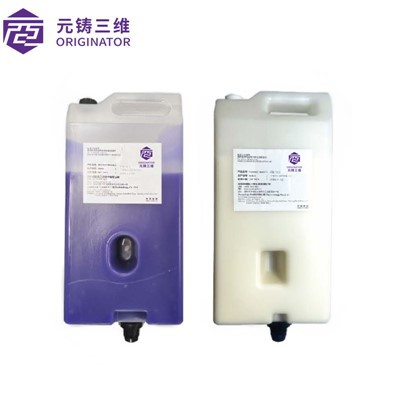
If you’re shopping around for 3D printing wax, don’t just look for the cheapest color option. Ask: What’s the pigment made of? Does it flow through my printer? Will it burn out clean? We answer all those questions for every color we sell, no fine print. If you’re ready to place an order, or just want to test a sample pack, reach out—we can walk you through which color fits your project, answer whatever random question you have, no sales pitch, just real talk about wax.
Jewelry 3D Printer References:
- “Wax-Based Materials for Additive Manufacturing: A Review of Composition, Printability, and Applications” – Journal of Manufacturing Processes, 2021
- “Photopolymer Wax Resins for High-Resolution 3D Printing in Jewelry Casting” – Journal of 3D Printing Materials, 2022
- “Impact of Pigment Selection on Burnout Properties of Lost-Wax 3D Printing Materials” – International Journal of Advanced Manufacturing Technology, 2020
Hangzhou Originator 3D Technology Co., Ltd.
Hangzhou Originator 3D Technology Co., Ltd. is one of the most experienced 3d printing wax material manufacturers and suppliers in China. With abundant experience, we warmly welcome you to wholesale high quality 3d printing wax material made in China here from our factory. Contact us for more details.
Address: Room 403, Building 2, Block B, Heda Incubation Park,No. 452, 6th Avenue, Xiasha, Qiantang District,Hangzhou, Zhejiang, China
E-mail: Sales@originator3d.com
WebSite: https://www.originator3d.com/
