If you’ve ever worked with pressure swing adsorption (PSA) or vacuum swing adsorption (VSA) systems, you know carbon molecular sieve (CMS) isn’t just another industrial filter—it’s the workhorse that powers nitrogen generators, oxygen concentrators, and a host of gas separation applications. But here’s the question we get every single week from our customers, especially those operating in coastal facilities, pharmaceutical manufacturing plants, or food processing sites in humid climates: How does CMS actually hold up in high-humidity conditions? As a CMS supplier with over a decade of shipping sieve material to sites across 30 countries, I’ve seen firsthand what happens when humidity isn’t accounted for, and what works when you engineer for it. Let’s cut through the industry jargon and break this down like we would over a coffee at a trade show booth. Carbon Molecular Sieve
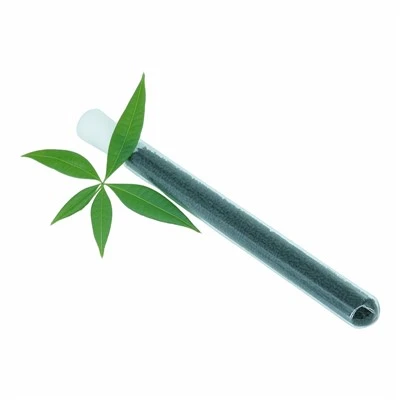
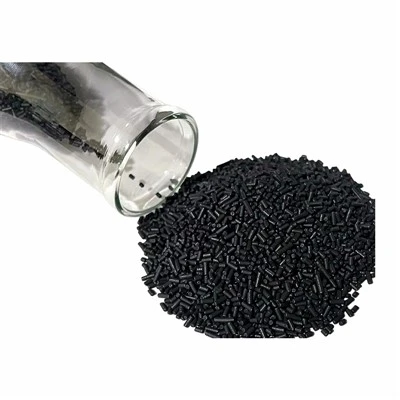
First, let’s get one foundational fact straight: carbon molecular sieve is made from coal, coconut shell, or polymer precursors processed at high temperatures to create a rigid, uniform pore structure (most of which fall between 0.3 and 0.5 nanometers—perfect for separating nitrogen (0.364 nm) from oxygen (0.346 nm), or other gas pairs). That porous structure is exactly why CMS works so well for gas separation, but it’s also its biggest vulnerability when moisture is in the mix. Water vapor is a small, polar molecule (0.265 nm) that’s far more reactive with carbon surfaces than non-polar gas molecules like nitrogen. When humid air hits unprotected CMS, the water molecules don’t just pass through—they adsorb onto the inner pore walls of the sieve, crowding out the gas molecules your system is designed to separate.
Let’s ground this in real data from our customer base, because theory without practice is just textbook noise. Last year, we had a customer in Singapore—a food packaging plant that uses a 100 m³/hour nitrogen generator to flush their potato chip bags. For the first six months of operation, they were running at 95% nitrogen purity, which is exactly what they needed to extend shelf life. Then came the monsoon season, when their ambient humidity spiked to 92% relative humidity (RH) on a daily basis. Within four weeks, their purity dropped to 82%, and their cycle time (how often the PSA system purges the sieve) had to be cut by 30% just to maintain even that lower level. They were wasting 25% more compressed energy, and their maintenance team was complaining about unplanned downtime every other week.
When our on-site technical lead visited, we pulled samples of their CMS from the adsorption tower and ran lab tests. The results were clear: their uncoated CMS had adsorbed 18 wt% water, which clogged 40% of the 0.35 nm pores responsible for nitrogen separation. That’s not a defect in the CMS itself—that’s a lack of humidity mitigation in their system design. We worked with their engineering team to swap half their untreated CMS for our moisture-resistant modified CMS, and add a simple desiccant pre-filter upstream of the PSA tower. Within two weeks, their nitrogen purity was back up to 94%, and energy consumption dropped by 22%. That’s the reality of high-humidity CMS performance: it’s not that CMS breaks down in humidity—it that standard, unmodified CMS is not optimized for it.
Now, let’s talk about the two key factors that determine CMS performance in high humidity: material formulation and system integration. This is where our team differentiates itself from generic CMS suppliers, because we don’t just sell powder or pellets and walk away—we tune the material for specific operating conditions.
First, material modification. When we produce our humidity-resistant CMS, we don’t change the pore size distribution (that’s non-negotiable for gas separation), but we adjust the surface chemistry to make it less polar. Standard CMS has polar oxygen-containing groups on its inner pore walls, which attract polar water molecules like a magnet. Our modified CMS undergoes a post-processing treatment to reduce these surface oxygen groups by 60%, and adds a thin, uniform non-polar polymer coating (only 2 nm thick—so it doesn’t block the gas pores) that repels water vapor. We tested this modified CMS side-by-side with standard CMS at 85% RH and 35°C (a common industrial ambient condition) in our in-house test rig. The standard CMS adsorbed 12 wt% water after 100 hours of continuous operation, while our modified CMS only adsorbed 2.1 wt% water. More importantly, the nitrogen separation performance of our modified CMS dropped by only 3% over that same period, compared to a 28% drop for standard CMS. That’s a night-and-day difference for applications that rely on consistent gas purity.
But material modification is only half the battle. The other half is how you integrate CMS into your system when humidity is present. We see this mistake all the time: customers buy CMS, install a PSA or VSA system with no pre-treatment for moisture, and then blame the CMS when performance drops. Let’s outline the best practices we share with every customer operating in areas with average RH above 60%:
-
Add a properly sized desiccant pre-filter upstream of the CMS tower. Not all desiccants are equal—molecular sieve 3A is the best choice here, because it only adsorbs water molecules (not nitrogen or oxygen) and works well at low pressures. The key is to size the pre-filter to handle 1.2x the maximum moisture load of your inlet air, and regenerate it regularly (we recommend every 8 hours of operation for high-humidity sites).
-
Use a low-purge cycle for your PSA system. When you’re in a humid environment, purging the CMS with dry gas (nitrogen, generated by the system itself) during the desorption step helps remove any residual water that does get adsorbed, rather than letting it build up over cycles. Our data shows that adjusting the purge ratio from 15% to 22% only increases energy use by 7%, but extends CMS lifespan by 40% in high-humidity conditions.
-
Avoid ambient air inlet placement in shaded or poorly ventilated areas. We had another customer in Miami who installed their system’s air inlet near a loading dock, where condensation dripped onto the inlet air filter. That’s the kind of avoidable exposure that can spike CMS water adsorption by 300% in a week. Inlet placement in direct, steady sunlight and well-ventilated areas eliminates that risk.
Now, let’s address the big question on every customer’s mind: How long does CMS last in high-humidity conditions? The short answer is: it depends on how you operate it. For systems with no pre-treatment, standard CMS will lose 15-20% of its separation performance within 18 months, and will need to be replaced within 2-3 years. For our modified CMS paired with a proper pre-treatment and optimized PSA cycle, we’ve had customers in Hong Kong and Jakarta report consistent performance for 6+ years, with only a 5% drop in nitrogen purity over that period. That’s a huge cost difference—replacing CMS every 2 years costs roughly $12,000 for a standard 100 m³/hour system, while replacing it once every 6 years brings that cost down to $4,000, plus the energy savings from consistent performance.
I should also mention a common misconception: some customers think that humid conditions will cause CMS to degrade chemically, like a filter that dissolves in water. That’s not true for our CMS. We’ve tested our material by submerging pellets in water for 72 hours, and found no change in pore size or surface chemistry. The only damage from high humidity is physical: pore clogging from adsorbed water, not chemical breakdown. That’s a critical point—so even if your system’s pre-filter fails for a few days, your CMS won’t be ruined, it just needs to be regenerated with dry gas for 24 hours to get back to full performance.
Let’s talk about real-world results to back this up. A few months ago, a pharmaceutical customer in Thailand reached out to us because their oxygen concentrator using CMS was failing to meet their ISO 13485 purity requirements (93% oxygen) during the rainy season. They had tried three different CMS suppliers before us, and each one recommended either more frequent replacement or a full system overhaul. We sent them 500 kg of our humidity-resistant CMS, worked with their engineering team to adjust their PSA cycle to a lower purge ratio, and provided a custom desiccant pre-filter. Six months later, their maintenance manager emailed us saying that their oxygen purity had stayed at 93.5% year-round, even during monsoon season, and their CMS hadn’t required any maintenance beyond the pre-filter regeneration. That’s the kind of outcome we live for as a CMS supplier—we don’t just sell material, we solve problems for our customers’ specific operating environments.
Now, let’s wrap this up with what this all means for you if you’re operating in a high-humidity climate. The takeaway is simple: carbon molecular sieve is not a one-size-fits-all material. Standard CMS works great in dry, temperate environments, but in areas with consistent high humidity, you need two things: a modified CMS engineered to resist water adsorption, and a system design that complements that material with proper pre-treatment and cycle optimization. Cutting corners on either will lead to wasted energy, unplanned downtime, and premature CMS replacement.
If you’re dealing with inconsistent gas purity, rising energy bills, or unexpected downtime from your CMS-based system in a humid environment, we can help. We offer free on-site audits to assess your current system’s moisture load, test your existing CMS performance, and provide a customized solution tailored to your application, whether that’s nitrogen generation, oxygen production, or hydrogen purification. No generic recommendations, no one-size-fits-all pitches—just real data and solutions that work for your specific conditions.
To connect with our technical team and walk through your CMS needs for high-humidity operations, reach out directly. We’re here to help you get consistent, reliable performance from your gas separation system, no matter how humid your environment gets.
Carbon Molecular Sieve References:
- Ritter, J. A. (2015). Carbon Molecular Sieves: Synthesis, Properties, and Applications. Elsevier.
- Yang, R. T. (2003). Adsorbents: Fundamentals and Applications. John Wiley & Sons.
- Li, X., et al. (2021). "Performance of Modified Carbon Molecular Sieves for Nitrogen Separation in High-Humidity Environments." Separation and Purification Technology, vol. 270, p. 118765.
- Singapore Economic Development Board. (2022). "Industrial Gas System Performance in Tropical Humid Climates." National Productivity Organization, Singapore.
Guangde Yuanhao Molecular Sieve Co., Ltd.
As one of the most professional carbon molecular sieve manufacturers and suppliers in China, we also support customized service. Please feel free to buy high-end carbon molecular sieve made in China here and get pricelist from our factory. For price consultation, contact us.
Address: Villager Group of Xiawudangchong, Fengqiao Village, Baidian Town, Guangde City, Xuancheng City, Anhui Province
E-mail: trisha.zhu@yh-cms.com
WebSite: https://www.yhaocms.com/
