Industry ceramics, known for their exceptional properties such as high temperature resistance, chemical stability, and excellent electrical insulation, have found a wide range of applications in various industries. Among them, the sensor industry stands out as a significant field where industry ceramics play a crucial role. As a leading industry ceramics supplier, I have witnessed firsthand how these advanced materials are revolutionizing the sensor technology landscape. Industry Ceramics

Piezoelectric Ceramics in Pressure and Vibration Sensors
Piezoelectric ceramics are a type of industry ceramics that generate an electric charge in response to applied mechanical stress, and vice versa. This unique piezoelectric effect makes them ideal for use in pressure and vibration sensors.
In pressure sensors, piezoelectric ceramics are used to convert pressure changes into electrical signals. For example, in automotive applications, these sensors are employed in tire pressure monitoring systems (TPMS). The piezoelectric ceramic element inside the sensor deforms when the tire pressure changes, generating an electric charge proportional to the pressure. This charge is then converted into a digital signal and transmitted to the vehicle’s dashboard, alerting the driver if the tire pressure is too low or too high.
Similarly, in vibration sensors, piezoelectric ceramics are used to detect and measure vibrations. These sensors are widely used in industrial machinery monitoring, where they can detect abnormal vibrations caused by mechanical faults or wear and tear. By continuously monitoring the vibrations, the sensors can provide early warnings, allowing for preventive maintenance and reducing the risk of costly breakdowns.
Ceramic Substrates in Gas Sensors
Gas sensors are essential for detecting and measuring the concentration of various gases in the environment. Industry ceramics, particularly ceramic substrates, play a vital role in the performance of these sensors.
Ceramic substrates are often used as a platform for depositing sensitive materials in gas sensors. These substrates offer several advantages, including high thermal stability, chemical inertness, and good mechanical strength. For example, alumina (Al₂O₃) ceramic substrates are commonly used in metal oxide semiconductor (MOS) gas sensors. The MOS sensing material is deposited on the alumina substrate, and when exposed to target gases, the electrical conductivity of the sensing material changes. This change in conductivity is then measured and correlated to the gas concentration.
In addition to alumina, other ceramic materials such as zirconia (ZrO₂) are also used in gas sensors. Zirconia-based oxygen sensors are widely used in automotive exhaust systems to measure the oxygen content in the exhaust gas. These sensors help to optimize the fuel-air mixture in the engine, improving fuel efficiency and reducing emissions.
Thermoelectric Ceramics in Temperature Sensors
Temperature sensors are used in a wide variety of applications, from industrial process control to consumer electronics. Thermoelectric ceramics, which can convert heat into electricity and vice versa, are increasingly being used in temperature sensors.
One of the most common types of thermoelectric temperature sensors is the thermocouple. A thermocouple consists of two different thermoelectric materials joined at one end. When there is a temperature difference between the joined end (the measuring junction) and the other end (the reference junction), a voltage is generated. This voltage is proportional to the temperature difference and can be measured to determine the temperature.
Industry ceramics such as bismuth telluride (Bi₂Te₃) and lead telluride (PbTe) are commonly used in thermoelectric temperature sensors. These materials have high thermoelectric efficiency, allowing for accurate temperature measurements over a wide range of temperatures. In addition, they offer good stability and reliability, making them suitable for long-term use in harsh environments.
Optical Ceramics in Optical Sensors
Optical sensors are used to detect and measure light, including visible light, infrared light, and ultraviolet light. Industry ceramics, particularly optical ceramics, are used in various optical sensor applications.
One example of optical ceramics used in sensors is transparent ceramics. Transparent ceramics such as yttrium aluminum garnet (YAG) and aluminum oxynitride (AlON) have high optical transparency, low scattering, and good mechanical properties. These materials are used in optical window applications, where they can protect the sensitive optical components of the sensor from the environment while allowing light to pass through.
Another application of optical ceramics in sensors is in luminescent materials. Luminescent ceramics can absorb and emit light at specific wavelengths, making them useful for optical sensing applications such as fluorescence sensors. For example, rare-earth-doped ceramics can be used as luminescent materials in biological sensors, where they can be excited by light to emit fluorescence signals, which can be used to detect the presence and concentration of specific biomolecules.
The Advantages of Using Industry Ceramics in Sensors
There are several advantages to using industry ceramics in the sensor industry. Firstly, their high temperature resistance allows sensors to operate in extreme environments where other materials would fail. For example, in aerospace applications, sensors made of industry ceramics can withstand the high temperatures generated during reentry into the Earth’s atmosphere.
Secondly, industry ceramics are chemically stable, which means they are resistant to corrosion and chemical attack. This makes them suitable for use in harsh chemical environments, such as in chemical processing plants and wastewater treatment facilities.
Thirdly, industry ceramics offer excellent electrical insulation properties, which are crucial for sensors that need to isolate electrical signals. This helps to improve the accuracy and reliability of the sensor measurements.
Conclusion
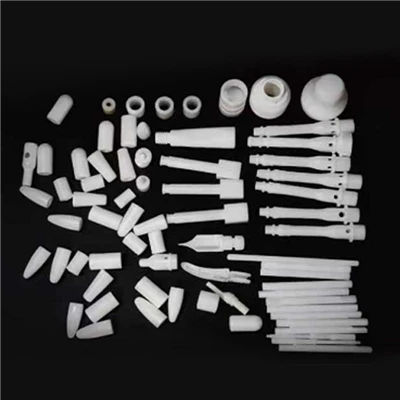
In conclusion, industry ceramics have a wide range of applications in the sensor industry, from pressure and vibration sensors to gas sensors, temperature sensors, and optical sensors. Their unique properties, such as high temperature resistance, chemical stability, and excellent electrical insulation, make them ideal for use in various sensor applications, particularly in harsh environments.
Ceramic Parts As an industry ceramics supplier, I am committed to providing high-quality ceramic materials and components to meet the diverse needs of the sensor industry. Whether you are developing a new sensor technology or looking to improve the performance of your existing sensors, I can offer you a wide range of industry ceramics solutions. If you are interested in learning more about our products or discussing potential applications, please feel free to contact me. I am always ready to assist you in finding the best ceramic materials for your sensor applications.
References
- "Handbook of Advanced Ceramics: Materials, Applications, Processing, and Properties" by Christoph A. Klein, Rüdiger Riedel, and Ikuo Yasuda.
- "Ceramics for High-Performance Applications" edited by Ralf Riedel and Wolfgang Hirthe.
- "Sensor Technology Handbook" by John Peterson.
Haining Yifeng Ceramic Technology Co., Ltd.
We are one of the most experienced industry ceramics manufacturers and suppliers in China, also support customized service. Welcome to buy high quality industry ceramics made in China here and get pricelist from our factory. For price consultation, contact us.
Address: No. 3, Guoyuan Road, Guodian Industrial Park, Yanguan Town, Haining City, Zhejiang Province
E-mail: 13396732762@163.com
WebSite: https://www.yifengcer.com/
