If you’ve ever spent time under a vehicle—whether you’re a professional mechanic, a DIY gearhead, or someone who just wants to understand how their car stays stable on the road—you know outer ball joints are tiny, critical parts most people don’t think about until something goes wrong. As someone who’s been supplying outer ball joints for over a decade, I’ve seen firsthand how a missed grease check can turn a routine repair into a safety hazard, or even shorten the lifespan of a suspension system that should last hundreds of thousands of miles. Today, I want to walk you through exactly how to check the grease level in an outer ball joint, why this step isn’t optional, and what suppliers like us do to make this process easier for everyone on the road. Outer Ball Joint
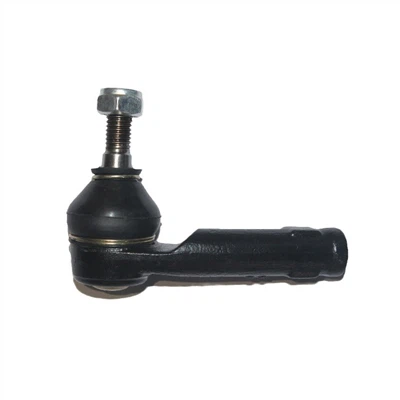
First, let’s get one thing straight: outer ball joints aren’t all the same, and that affects how you check their grease level. For the uninitiated, an outer ball joint is the pivot point that connects your steering knuckle to the control arm, right on the end of the assembly that’s exposed to road grime, water, and debris. Most modern ball joints come sealed as a “lubed for life” (LFT) unit, but wait—here’s a common misconception I’ve heard mechanics and DIYers repeat so many times: “Lubed for life means I never have to grease it again.” That’s not always true, especially if you drive in harsh conditions—think snow and salt in winter, dirt roads in the summer, or off-roading where your suspension takes a beating. Even sealed ball joints can develop tiny leaks over time, or the grease can break down from heat, leaving the joint unprotected. That’s why checking the grease level is part of regular suspension maintenance, not just a fix for when something breaks.
So, how do you actually do this? I’ve trained every new technician at our facility on this process, because getting it wrong can damage the joint you’re trying to inspect. First, you need to gather your tools, and they’re all basic stuff you probably already have: a jack and jack stands (never work under a vehicle only supported by a jack), a breaker bar or ratchet, a clean rag, a small flathead screwdriver, and a grease gun if your ball joint has a grease fitting. Wait—let’s pause here to note: some newer outer ball joints don’t have a grease zerk, which is why checking grease level isn’t as simple as pumping grease until it oozes out. That’s a key point for anyone working on post-2010 vehicles, where manufacturers shifted to fully sealed assemblies to reduce maintenance.
Let’s break this down into two scenarios: ball joints with a grease fitting (serviceable) and without (sealed). Let’s start with the serviceable ones, which are still common on pickup trucks, SUVs, and older passenger cars, because that’s what many of our customers request for heavy-duty use.
First step for any inspection, before you even touch the ball joint: get the vehicle safely elevated. Park on a flat, level surface, engage the parking brake, and chock the rear wheels (if you’re working on a front-wheel drive vehicle) to keep it from rolling. Jack up the front of the vehicle just enough to get the wheel off the ground, then lower it onto jack stands positioned under the frame rails—never under the control arm or steering knuckle, as those can shift. Grab the wheel at the top and bottom and wiggle it; if there’s excessive play, that might be a sign the ball joint is already worn, but we’ll focus on grease level today.
Now, for serviceable outer ball joints with a grease zerk: Locate the zerk fitting on the side of the ball joint assembly. It’s a small, metal valve, usually facing outward so you can attach a grease gun. Before you do anything else, use your clean rag to wipe around the zerk—any dirt or grime here will get pushed into the joint if you don’t clean it, which is a quick way to cause contamination and wear. Next, check if the zerk is clogged. Take your small flathead screwdriver and gently poke into the hole—if no grease comes out, that means the fitting is blocked, and you’ll need to clean it with a zerk fitting cleaner or replace it before you can check grease level.
Once the zerk is clear, here’s where most people make a mistake: you don’t just pump grease until it comes out, because that can overpressurize the joint and damage the seals. Instead, to check the existing grease level, you want to attach the grease gun to the zerk, then slowly apply light pressure for 2-3 seconds. If grease comes out the zerk when you do that, that means there’s still adequate lubricant inside the joint. If nothing comes out? That means the grease has broken down, leaked out, or dried up, and the joint needs to be regreased. But wait—one caveat: if it’s been a long time since the last grease job, or if you’re driving in extremely dusty conditions, you might see a little bit of dark, dirty grease come out. That’s not a bad thing, it means old, contaminated grease is being pushed out, and new, clean grease is getting in. But if you only get air or no material at all, the grease level is too low.
Now, for sealed outer ball joints—those without a grease zerk, which are standard on many sedans, crossover SUVs, and some newer light trucks. This is where checking grease level gets a little more nuanced, because you can’t pump grease into them to test, and you have no external zerk to look at. How do you know if they have enough grease? First, inspect the rubber or plastic boot that covers the ball joint. This boot is your first line of defense, and a torn or cracked boot is a red flag. If the boot is intact, squeeze it gently (it’s flexible, right?)—if it’s firm and holds its shape, that means the grease inside is still there and properly lubricating the joint. If it’s soft, squishy, or feels empty, that’s a sign the grease has likely leaked out or dried up. You should also inspect the boot for any signs of grease seepage on the inside of the wheel or control arm—even a small tear can let grease escape over time, leaving the joint unprotected.
I want to emphasize here that as a ball joint supplier, we design our products so that this inspection is as easy and reliable as possible. Years ago, many sealed ball joints had boot design flaws—they would crack along the seam after a few thousand miles, and users would never notice until the ball was dry and worn out. We changed our design a few years back: we made the boot out of a thicker, synthetic rubber that’s resistant to ozone and road chemicals, and we added a visible seam indicator line on the boot. If the line is intact, the boot is good; if it’s split or worn, you can replace the boot (though we recommend replacing the entire outer ball joint if the boot is damaged, because that’s usually a sign of underlying wear). That’s the kind of practical, user-focused design we prioritize, because we know our customers—mechanics, fleet managers, DIYers—don’t have time for guesswork.
Now, let’s talk about why checking grease level matters beyond just keeping your suspension quiet. I’ve seen too many cases where a driver ignored a creaky front end or a slightly loose steering feel, only to have an outer ball joint fail while they’re going 60 mph on the highway. That failure can cause the wheel to detach from the vehicle, which is catastrophic. Proper grease level prevents that wear: grease acts as a buffer between the ball and the socket inside the joint, reducing friction, absorbing shock from road bumps, and keeping out contaminants like dirt and water. Too little grease means metal-on-metal contact, which leads to pitting and wear; too much grease (from over-pumping a serviceable joint) can blow out the boot, letting contaminants in and leading to the same problem. It’s a balance, and checking the level regularly keeps that balance right.
How often should you check that level? We recommend every 10,000 to 15,000 miles, or twice a year if you live in an area with harsh weather or drive off-road, gravel roads, or in heavy stop-and-go traffic. For sealed joints, even if they’re “lubed for life,” inspecting the boot every oil change (around 5,000 miles) is a good habit, because a small tear caught early is way easier and cheaper to fix than a replacement ball joint.
Wait, I want to address one more common question I get from customers: can I add grease to a sealed outer ball joint? The short answer is: rarely. Most sealed ball joints are designed so you can’t access the internal cavity without drilling a hole, which would void any warranty and risk contaminating the joint more. It’s not worth it—most modern sealed ball joints last 100,000+ miles if you keep the boot intact, so checking the boot is all you need. If the boot is damaged, replace the joint; don’t try to grease it through a custom hole, that’s a quick fix that will fail.
As someone who’s in the business of supplying outer ball joints, I also want to stress that using the right parts makes this whole process easier. A cheap, no-name ball joint might have a flimsy boot that cracks in two years, or a zerk that snaps off when you try to grease it. Our ball joints are built with precision-machined sockets, high-grade synthetic grease that resists breakdown in extreme temperatures, and boots engineered to last the life of the joint under normal driving. We stand behind our products because we know how critical they are to safety, and that starts with making maintenance like checking grease level straightforward and reliable.

If you’re a mechanic looking to stock reliable outer ball joints for your fleet, a fleet manager needing parts that keep your work vehicles on the road, or a DIYer working on your own car and want parts you can trust, we’re here to help. Whether you need standard serviceable joints, heavy-duty options for pickup trucks and off-road use, or newer sealed assemblies for passenger vehicles, we can work with you to find the right product for your needs. We understand that every customer has different requirements, from regular passenger cars to commercial trucks that put thousands of miles on rough roads every month, so we tailor our solutions accordingly.
Ball Joint When you’re ready to talk parts, or have questions about maintenance that go beyond checking grease levels, our team is here to assist. We don’t push one-size-fits-all parts, because we know that a ball joint for a daily commuter isn’t the same as one for a work truck or an off-road vehicle. Just reach out to our team to connect about your needs, and we can help you get the right parts and guidance to keep your vehicles safe and running smoothly.
References
- Automotive Suspension and Steering: Principles, Diagnosis, and Service, 4th Edition. Delmar Cengage Learning, 2019.
- National Highway Traffic Safety Administration (NHTSA). “Motor Vehicle Safety Standards: Suspension Systems.” Federal Register, Vol. 82, No. 123, June 2017.
- SAE International. “Grease Compatibility and Performance for Chassis Components.” SAE International Journal of Materials and Manufacturing, Vol. 11, No. 2, 2018.
- The Automotive Aftermarket Industry Association (AAIA). “Best Practices for Chassis Component Maintenance,” 2020.
Taizhou Huazhe Auto Parts Co., Ltd.
As one of the most professional outer ball joint manufacturers and suppliers in China, we’re featured by quality products and low price. Please rest assured to buy bulk high-grade outer ball joint in stock here from our factory. For pricelist, contact us now.
Address: No. 2828, Binkang Avenue, Sanjia Street, Taizhou Bay New Area, Taizhou City, Zhejiang Province
E-mail: 19906762800@163.com
WebSite: https://www.huazheindustry.com/
