Hey there! I’m a supplier of flange bolting Belleville washers. One of the most common questions I get from customers is how to select the appropriate Belleville washer hardness for flange bolting. It’s a crucial question because getting the hardness right is key to the success of your bolting applications. So, let’s dive into it. Flange Bolting Belleville Washer

Why Hardness Matters in Belleville Washers for Flange Bolting
First off, why is the hardness of a Belleville washer so important in flange bolting? Well, the main job of a Belleville washer in a flange bolting setup is to maintain a consistent preload on the bolts. Flanges are used in all sorts of applications, from pipelines in the oil and gas industry to machinery in manufacturing plants. Over time, factors like vibration, thermal expansion and contraction, and external loads can cause the bolts to loosen. A properly selected Belleville washer can compensate for these changes and keep the joint tight.
The hardness of the washer affects its ability to withstand the stresses it’ll encounter. If the washer is too soft, it might deform permanently under the load, losing its ability to maintain the preload. On the other hand, if it’s too hard, it could be brittle and crack, which defeats the whole purpose of using a washer in the first place.
Understanding Hardness Measurements
Before we get into how to select the right hardness, let’s quickly go over how hardness is measured. The most common scale for measuring the hardness of metals, including Belleville washers, is the Rockwell hardness scale. You’ll often see hardness values given as HRC (Rockwell C scale). This scale gives a numerical value that represents the resistance of the material to indentation.
For example, a typical range of hardness for high – quality Belleville washers used in general flange bolting applications might be between 40 – 50 HRC. But this can vary depending on a bunch of factors.
Factors to Consider When Selecting Hardness
Application Environment
The environment where the flange bolting will be used plays a big role in determining the appropriate washer hardness. If the application is in a high – temperature environment, like in a power plant boiler or a furnace, the washer needs to be able to maintain its hardness and mechanical properties at those elevated temperatures. In such cases, you might need a washer with a higher hardness and better heat – resistant properties.
On the flip side, if the application is in a corrosive environment, like a chemical processing plant or an offshore oil rig, the washer needs to have good corrosion resistance. Sometimes, a slightly lower hardness might be acceptable if the washer is made from a corrosion – resistant material and you can still achieve the required preload.
Bolt Size and Tightening Torque
The size of the bolts and the tightening torque also matter. Larger bolts usually require more preload, and thus, a stiffer and harder washer might be needed to handle the higher forces. The tightening torque is directly related to the preload. If you’re using a high – torque tightening method, the washer needs to be able to withstand the resulting pressure without deforming excessively.
For instance, if you’re using M24 bolts tightened to a high torque value, a softer washer might not be able to maintain the preload, so you’d likely need a washer with a higher hardness.
Load Characteristics
The type of load the flange joint will experience is another factor. If it’s a static load, like a flange holding a stationary tank together, the requirements for the washer hardness might be less stringent compared to a dynamic load situation. Dynamic loads, such as those caused by machinery vibrations or cyclic pressure changes, can put more stress on the washer. In these cases, a harder washer might be needed to prevent fatigue failure.
General Guidelines for Hardness Selection
As a starting point, here are some general guidelines. For light – duty flange bolting applications with small – sized bolts (e.g., M6 – M12) and low to moderate loads, a washer with a hardness in the range of 38 – 42 HRC might be sufficient. These are often used in non – critical applications like small – scale plumbing or some consumer – grade machinery.
For medium – duty applications with bolts in the range of M16 – M20 and moderate loads, a hardness of 42 – 46 HRC is a good choice. This covers a wide range of industrial applications, such as general machinery assemblies and some pipeline connections.
For heavy – duty applications with large bolts (e.g., M24 and above) and high loads, especially in high – vibration or high – temperature environments, you’ll want a washer with a hardness of 46 – 50 HRC or even higher in some cases.
Testing and Verification
It’s important to note that these are just general guidelines. In real – world applications, you should always test the washer in a representative environment. You can do some simple tests like measuring the preload before and after a set period of operation to see if the washer is maintaining its function.
Also, ask your Belleville washer supplier for technical data sheets. Reputable suppliers, like us, usually provide information on the hardness, material properties, and performance of their washers. This data can help you make an informed decision.
Our Offerings
At our place, we offer a wide range of Belleville washers with different hardness levels to suit various flange bolting applications. We understand that every customer’s needs are unique, and we’re committed to helping you find the right washer for your specific situation.
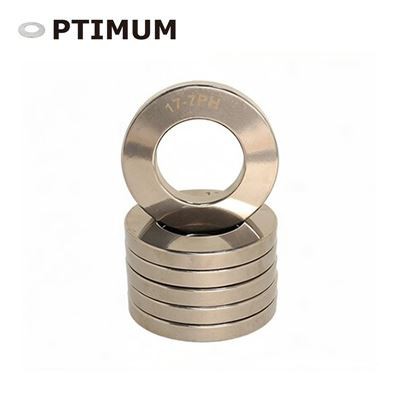
Our team of experts is always ready to answer your questions and provide you with personalized advice. Whether you’re working on a small DIY project or a large – scale industrial installation, we’ve got the products and knowledge to support you.
Let’s Connect
TREP French Spring Washers If you’re in the market for flange bolting Belleville washers and need help selecting the appropriate hardness, don’t hesitate to reach out. We’re here to make the process as easy as possible for you. Contact us today to start a discussion about your requirements and let’s find the perfect solution together.
References
- ASME Boiler and Pressure Vessel Code
- ASTM Standards for Fasteners and Washers
- Machinery’s Handbook
Yangzhou Optimum Spring Manufacturing Co., Ltd.
As one of the most professional flange bolting belleville washer manufacturers and suppliers in China, we’re featured by quality products and good service. Please rest assured to buy customized flange bolting belleville washer made in China here from our factory. For more information, contact us now.
Address: No.9 West of Shuangtang Rd, Yangzhou, P.R. China 225000
E-mail: susie@optimum-spring.com
WebSite: https://www.optimum-spring.com/
